
Oxalate levels are sometimes reported in mmol/L, especially in metabolic or kidney-related laboratory testing. In other reports, the value may appear in mg/dL. Use the calculator below for instant conversion:
Oxalate Calculator
Conversion settings
Exact Oxalate Conversion Formula
To convert oxalate from mmol/L to mg/dL, use its molecular weight.
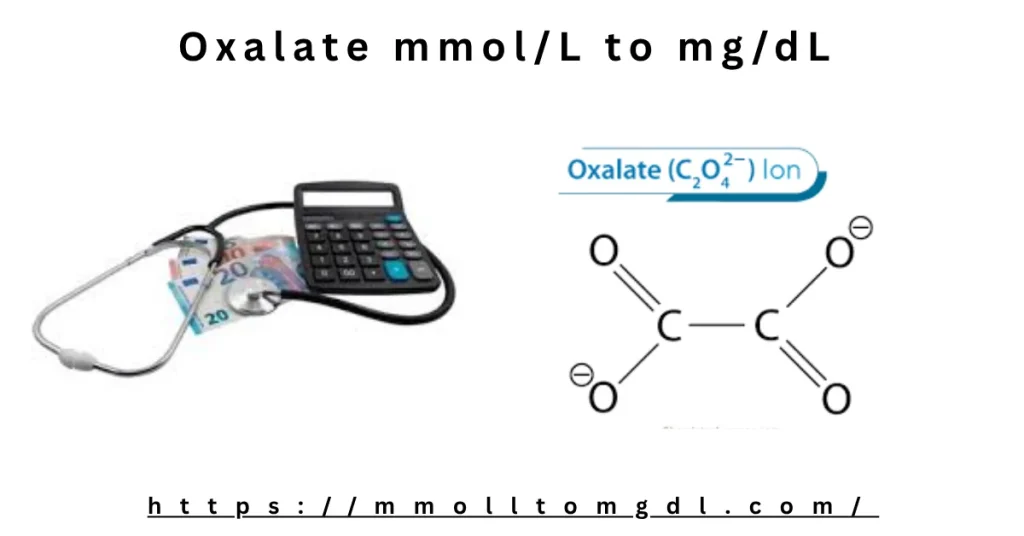
Molecular weight of oxalate (C₂O₄²⁻) ≈ 88.02 g/mol
The standard conversion is:
mg/dL = mmol/L × 8.802
This factor comes from dividing the molecular weight by 10 (to adjust from liters to deciliters).
Quick Example
If oxalate = 0.40 mmol/L
0.40 × 8.802 = 3.52 mg/dL
So, 0.40 mmol/L equals approximately 3.52 mg/dL.
Why Oxalate Is Measured
Oxalate is a naturally occurring compound found in many foods and produced by the body. It binds with calcium and can form calcium oxalate crystals.
Clinically, oxalate testing is commonly associated with:
- Kidney stone evaluation
- Metabolic disorders
- Malabsorption conditions
- Primary hyperoxaluria
Accurate unit conversion is important when comparing lab reports from different regions or laboratories.
Normal Oxalate Reference Range
Reference ranges vary by laboratory and whether plasma, serum, or urine oxalate is measured.
For plasma oxalate (approximate values):
- Normal: less than 1–2 mg/dL (lab dependent)
Urine oxalate is often reported in mg/24 hours rather than mg/dL.
Always interpret results using your laboratory’s reference interval.
When Oxalate Levels Are Elevated
High oxalate levels may be associated with:
- Kidney stones (calcium oxalate stones)
- Primary hyperoxaluria
- Enteric hyperoxaluria (malabsorption)
- Chronic kidney disease
Symptoms can include flank pain, recurrent kidney stones, or reduced kidney function.
When Oxalate Levels Are Low
Low oxalate levels are usually not clinically significant. In most cases, the focus is on elevated values rather than low ones.
Why Laboratories Use Different Units
Some regions report biochemical markers in mmol/L because it reflects molar concentration. Others use mg/dL, which reflects mass concentration.
Because oxalate has a specific molecular weight, converting between units requires an exact factor. Using a general conversion formula without molecular weight leads to inaccurate results.
This calculator ensures precise conversion based on the correct molecular weight of oxalate.
Practical Conversion Tips
- Always confirm whether the value is plasma or urine oxalate
- Verify the unit before interpreting results
- Use the correct molecular-weight-based factor
- Do not confuse oxalate with oxalic acid reporting (rare in clinical labs)
Frequently Asked Questions
How do you convert oxalate from mmol/L to mg/dL?
Multiply the value in mmol/L by 8.802 to get mg/dL.
What is the molecular weight of oxalate?
Oxalate (C₂O₄²⁻) has a molecular weight of approximately 88.02 g/mol.
Is oxalate testing common in routine labs?
It is not part of standard routine panels but may be ordered for kidney stone evaluation or suspected metabolic disorders.
What causes high oxalate levels?
High oxalate can result from genetic disorders (primary hyperoxaluria), high dietary intake, intestinal malabsorption, or kidney dysfunction.
Final Words
Oxalate conversion between mmol/L and mg/dL requires an accurate molecular-weight-based formula. Small errors in unit conversion can affect interpretation, especially in kidney-related conditions.
Use the calculator above for instant and reliable results. Always interpret laboratory findings in the context of clinical evaluation and physician guidance.