Ethanol (blood alcohol) conversion: ethanol mmol/L × 4.607 = mg/dL, and mg/dL ÷ 1,000 = BAC %. So 17.4 mmol/L = 80 mg/dL = 0.08% BAC = 0.8‰ (promille). A normal ethanol level in someone who has not been drinking is zero (reported as “not detected” or below 10 mg/dL / 2.2 mmol/L).
Ethanol (EtOH) Calculator
Conversion settings
Ethanol Conversion Factors: mmol/L, mg/dL, BAC and Promille
Ethanol (EtOH, ethyl alcohol) has a molar mass of 46.07 g/mol.
| Convert | Formula | Example |
|---|---|---|
| mmol/L to mg/dL | mg/dL = mmol/L × 4.607 | 20 mmol/L = 92.1 mg/dL |
| mg/dL to mmol/L | mmol/L = mg/dL ÷ 4.607 (or × 0.217) | 100 mg/dL = 21.7 mmol/L |
| mg/dL to BAC % | BAC % = mg/dL ÷ 1,000 | 80 mg/dL = 0.08% |
| mmol/L to BAC % | BAC % = mmol/L × 0.004607 | 17.4 mmol/L = 0.080% |
| BAC % to mg/dL | mg/dL = BAC % × 1,000 | 0.05% = 50 mg/dL |
| mg/dL to mg/L | mg/L = mg/dL × 10 | 80 mg/dL = 800 mg/L |
| BAC % to promille (‰) | ‰ = BAC % × 10 (about g/L) | 0.08% = 0.8‰ |
| mmol/L to promille | ‰ = mmol/L ÷ 21.7 | 21.7 mmol/L = 1.0‰ |
Ethanol mmol/L to mg/dL and BAC Chart
| Ethanol (mmol/L) | Ethanol (mg/dL) | BAC (%) | Promille (‰) |
|---|---|---|---|
| 2.2 mmol/L | 10.1 mg/dL | 0.010% | 0.10 ‰ |
| 5.0 mmol/L | 23.0 mg/dL | 0.023% | 0.23 ‰ |
| 10.0 mmol/L | 46.1 mg/dL | 0.046% | 0.46 ‰ |
| 10.9 mmol/L | 50.2 mg/dL | 0.050% | 0.50 ‰ |
| 15.0 mmol/L | 69.1 mg/dL | 0.069% | 0.69 ‰ |
| 17.4 mmol/L | 80.2 mg/dL | 0.080% | 0.80 ‰ |
| 20.0 mmol/L | 92.1 mg/dL | 0.092% | 0.92 ‰ |
| 21.7 mmol/L | 100.0 mg/dL | 0.100% | 1.00 ‰ |
| 25.0 mmol/L | 115.2 mg/dL | 0.115% | 1.15 ‰ |
| 30.0 mmol/L | 138.2 mg/dL | 0.138% | 1.38 ‰ |
| 35.0 mmol/L | 161.2 mg/dL | 0.161% | 1.61 ‰ |
| 40.0 mmol/L | 184.3 mg/dL | 0.184% | 1.84 ‰ |
| 50.0 mmol/L | 230.4 mg/dL | 0.230% | 2.30 ‰ |
| 60.0 mmol/L | 276.4 mg/dL | 0.276% | 2.76 ‰ |
| 65.0 mmol/L | 299.5 mg/dL | 0.299% | 2.99 ‰ |
| 70.0 mmol/L | 322.5 mg/dL | 0.322% | 3.22 ‰ |
| 80.0 mmol/L | 368.6 mg/dL | 0.369% | 3.69 ‰ |
| 100.0 mmol/L | 460.7 mg/dL | 0.461% | 4.61 ‰ |
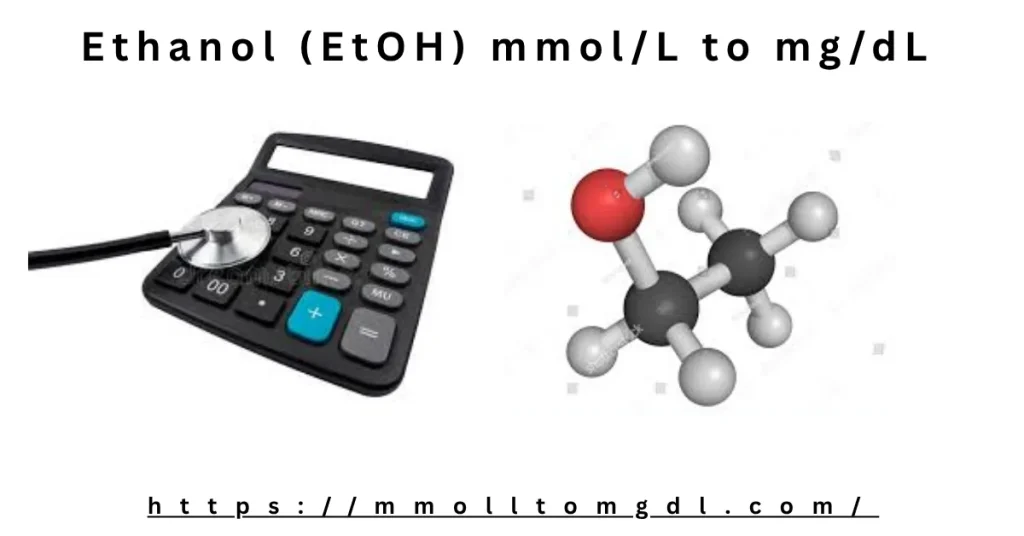
Blood Alcohol mg/dL to BAC Conversion Chart
Hospital labs usually report ethanol in mg/dL or mmol/L, while legal limits use BAC as a percentage. To convert an ethanol level in mg/dL to BAC, divide by 1,000. For the reverse direction, use the ethanol mg/dL to mmol/L converter.
| Ethanol (mg/dL) | Ethanol (mmol/L) | BAC (%) | Promille (‰) |
|---|---|---|---|
| 10 mg/dL | 2.2 mmol/L | 0.010% | 0.10 ‰ |
| 20 mg/dL | 4.3 mmol/L | 0.020% | 0.20 ‰ |
| 30 mg/dL | 6.5 mmol/L | 0.030% | 0.30 ‰ |
| 50 mg/dL | 10.9 mmol/L | 0.050% | 0.50 ‰ |
| 80 mg/dL | 17.4 mmol/L | 0.080% | 0.80 ‰ |
| 100 mg/dL | 21.7 mmol/L | 0.100% | 1.00 ‰ |
| 150 mg/dL | 32.6 mmol/L | 0.150% | 1.50 ‰ |
| 200 mg/dL | 43.4 mmol/L | 0.200% | 2.00 ‰ |
| 250 mg/dL | 54.3 mmol/L | 0.250% | 2.50 ‰ |
| 300 mg/dL | 65.1 mmol/L | 0.300% | 3.00 ‰ |
| 350 mg/dL | 76.0 mmol/L | 0.350% | 3.50 ‰ |
| 400 mg/dL | 86.8 mmol/L | 0.400% | 4.00 ‰ |
| 500 mg/dL | 108.5 mmol/L | 0.500% | 5.00 ‰ |
Serum vs Whole Blood Alcohol (Hospital vs Legal BAC)
Hospital ethanol levels are usually measured in serum or plasma, while legal BAC is defined for whole blood. Serum contains more water than whole blood, so serum ethanol is about 10–20% higher. A commonly used estimate is: whole-blood BAC ≈ serum ethanol ÷ 1.14. For example, a serum ethanol of 100 mg/dL corresponds to a whole-blood BAC of roughly 88 mg/dL (0.088%). This is an estimate; forensic results must come from an accredited laboratory.
Normal Ethanol Level in Blood and What Levels Mean
| Blood alcohol | mmol/L | mg/dL | BAC % |
|---|---|---|---|
| Normal (no alcohol) | 0 (not detected) | 0 (not detected) | 0.00% |
| Lab reporting limit, often shown as “<10" | below 2.2 | below 10 | below 0.01% |
| Common legal driving limit (many countries) | 10.9 | 50 | 0.05% |
| US / England legal driving limit | 17.4 | 80 | 0.08% |
| Marked intoxication for most people | 21.7 – 43.4 | 100 – 200 | 0.10 – 0.20% |
| Severe intoxication, risk of unconsciousness | above about 65 | above about 300 | above 0.30% |
| Potentially fatal | above about 87 | above about 400 | above 0.40% |
Effects vary widely between people, especially with tolerance. An ethanol level of 10 mg/dL is the lowest level many hospital labs report; a result of “10 mg/dL” or “<10 mg/dL" means little or no alcohol. Seek emergency help for anyone who is very drowsy, confused or hard to wake after drinking.
Frequently Asked Questions
How do I convert ethanol mmol/L to mg/dL?
Multiply by 4.607. For example, 20 mmol/L × 4.607 = 92.1 mg/dL.
How do I convert an ethanol level in mg/dL to BAC?
Divide mg/dL by 1,000. An ethanol level of 80 mg/dL = 0.08% BAC; 150 mg/dL = 0.15% BAC.
How do I convert ethanol mmol/L to BAC?
Multiply mmol/L by 0.004607. For example, 17.4 mmol/L = 0.080% BAC, and 50 mmol/L = 0.230% BAC.
How do I convert ethanol mmol/L to promille?
Divide mmol/L by 21.7. For example, 21.7 mmol/L = 1.0‰ and 10.9 mmol/L = 0.5‰.
What is a normal ethanol level in blood in mmol/L?
Normally zero. Most labs report “not detected” or less than 2.2 mmol/L (10 mg/dL) when there is no meaningful alcohol in the blood.
What does an ethanol level of 10 mg/dL mean?
10 mg/dL (2.2 mmol/L, 0.01% BAC) is a very low level, and is the reporting limit at many labs.
Is hospital serum alcohol the same as legal BAC?
No. Serum ethanol is about 14% higher than whole-blood BAC, so divide by about 1.14 for an estimate.
Related: ethylene glycol mmol/L to mg/dL and all toxicology and drug level conversions. In Scandinavian languages, etanol konvertering uses the same factors.